If you live with diabetes, you already know the mental load that comes with it. The constant mental math — every meal, every workout, every stressful moment at work — adds up in ways people who don’t share this condition simply can’t imagine. I’ve had days where I felt more like a mathematician than a person, balancing carbs and insulin and stress hormones and sleep. If that sounds familiar, this article is written for you.
The good news? The medical community is finally catching up to what we’ve known for a long time: real-time glucose data changes everything. In January 2026, the American Diabetes Association released its landmark Standards of Care in Diabetes — 2026, and for the first time, the guidelines go beyond simply considering continuous glucose monitoring (CGM) and now formally recommend CGM use at the time of diabetes diagnosis and at any point thereafter for anyone who could benefit — not just insulin users, not just those with frequent lows, but broadly, for all of us. The 2026 guidelines explicitly state that CGM can improve glycemic management for people on noninsulin therapies too, and that over-the-counter CGMs are acknowledged as a valid tool for lifestyle feedback and glucose awareness.
That validation matters. For years, many of us pushed for access to this technology only to be told it wasn’t necessary unless things got worse. Now, the nation’s leading diabetes authority is saying: don’t wait. Understand your glucose now. Use the technology now. And that’s exactly why I want to share what I’ve been learning about Lingo by Abbott — a CGM wearable built on the same trusted FreeStyle Libre platform many of us already rely on — and the significant expansions it has made available to more people in recent months. Whether you’re managing type 1, type 2, or simply trying to stay ahead of where your numbers are heading, this is technology worth knowing about.
Abbott’s Lingo continuous glucose monitor (CGM) has been making waves in the metabolic health space since its U.S. debut in 2024. Unlike traditional CGMs designed specifically for people managing diagnosed diabetes, Lingo is an over-the-counter (OTC) biowearable built for anyone who wants a real-time window into how their body processes glucose. In recent months, the device has seen a flurry of significant updates — and if you haven’t kept up, here is what’s new.
What Is Lingo by Abbott?
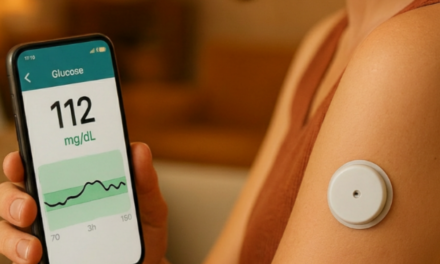
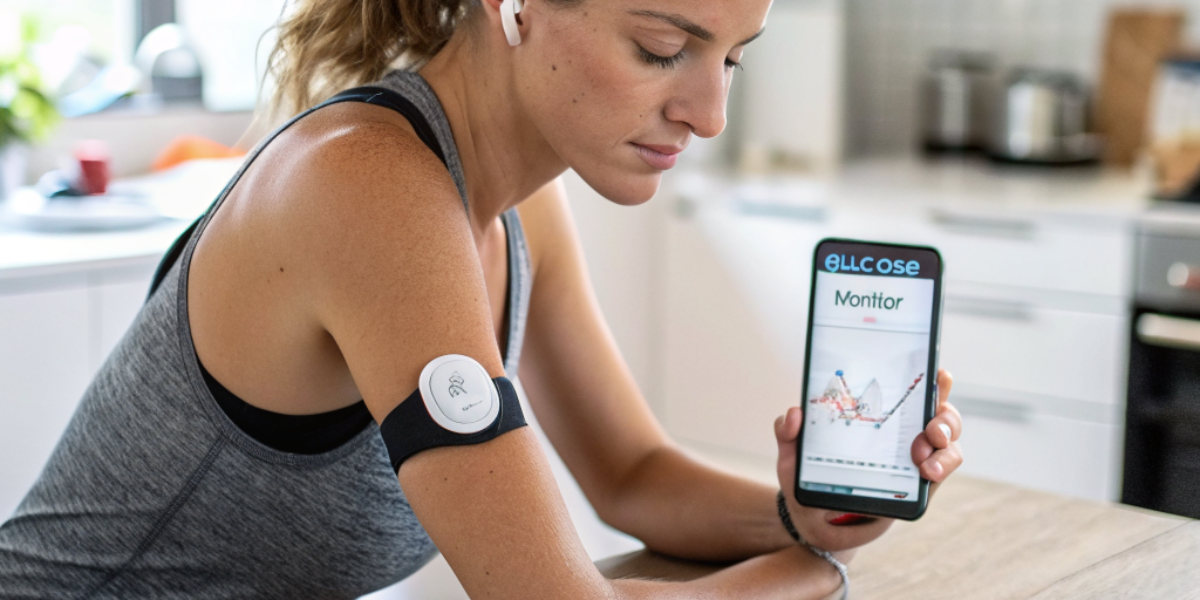
Lingo is a consumer-grade CGM built on the same FreeStyle Libre technology platform that has already helped roughly 6 million people worldwide manage diabetes. The biosensor is worn on the upper arm for up to 14 days and monitors glucose levels minute by minute. It connects to a smartphone app that translates raw glucose data into personalized coaching, habits, and insights.
The device is available over the counter — no prescription required — and is intended for adults 18 and older who are not on insulin. It is not a diagnostic tool for diabetes, but rather a wellness device designed to help people understand how food, movement, stress, and sleep affect their glucose patterns.
A key feature is Lingo Count™, a daily metric that quantifies the cumulative impact of glucose spikes throughout the day. The higher your Lingo Count, the more your glucose is spiking — giving users a simple, actionable number to track and reduce over time.
Big News #1: Lingo Is Now Available on Android
For most of its U.S. history, the Lingo app was limited to iPhone users. That changed in December 2025, when Abbott announced that Lingo is now fully compatible with Android devices.
The Lingo app is now available for download on the Google Play Store in addition to the Apple App Store. For a device whose mission is to democratize metabolic health awareness, this is a major milestone — Android commands more than 70% of the global smartphone market, meaning millions of additional people can now access real-time glucose data without needing to switch phones.
Abbott’s head of Medical Affairs for Lingo, Dr. Amy McKenzie, put the significance of this plainly: more than 98 million U.S. adults have prediabetes, and about 80% of them don’t know it. Expanding to Android removes a key barrier to entry for a tool that could help those people understand and manage their metabolic health before it progresses to type 2 diabetes.
Big News #2: Lingo Hits Walgreens Shelves
Also in December 2025, Abbott announced that Lingo is now available at Walgreens — both in brick-and-mortar stores and online. This follows earlier retail expansions through Amazon and Walmart, which served as the device’s first e-commerce and physical retail partners respectively.
The Walgreens partnership is particularly notable given the chain’s national footprint. According to Abbott, approximately 78% of Americans live within five miles of a Walgreens location, meaning the majority of the U.S. population can now purchase a Lingo biosensor during a routine pharmacy trip — no special order or online shopping required.
Olivier Ropars, divisional VP of Abbott’s Lingo business, framed the retail push around the urgency of the prediabetes crisis, noting that understanding your body’s real-time response to food, stress, and movement is an important first step — and that making Lingo accessible at Walgreens brings that capability to far more people.
What the Data Says: Real-World Results
Abbott has been publishing real-world outcome data from Lingo users, and the numbers are encouraging. According to the company:
- 95% of Lingo members report developing new habits based on glucose tracking.
- Users with elevated glucose levels who reduce their Lingo Count over about three months cut time above the healthy glucose range in half.
- Those same users also saw an average 10% reduction in overall glucose levels.
New data released alongside the Android launch also highlighted a connection between protein supplementation and lower glucose. Real-world Lingo data showed that people who consumed high-protein nutritional drinks tended to experience lower glucose levels — an effect that was even more pronounced among individuals with obesity.
Why This Matters for Prediabetes and Diabetes Prevention
The broader context behind Lingo’s rapid expansion is a public health challenge of enormous scale. Prediabetes — a condition where blood glucose is elevated but not yet in the diabetic range — affects nearly 100 million Americans, yet the vast majority are unaware of their status.
A landmark study published in The Lancet Diabetes & Endocrinology found that people with prediabetes who return their glucose to the normal range can cut their risk of cardiovascular death or hospitalization for heart failure by 50% over two decades. That kind of risk reduction underscores just how much is at stake in catching and addressing elevated glucose early.
Lingo’s approach — making glucose monitoring accessible, affordable, and prescription-free — positions it as a front-line tool for metabolic awareness. It’s not a replacement for clinical care, but for millions of people who might not otherwise think about their glucose until a diagnosis arrives, it offers an early warning system baked into everyday life.
Where Can You Buy Lingo?
Lingo biosensors are currently available through the following channels:
- com (Abbott’s official website)
- Amazon (online)
- Walmart (in-store and online)
- Walgreens (in-store and online)
The app is available for both iOS (Apple App Store) and Android (Google Play Store).
The Bottom Line
Abbott’s Lingo CGM has moved quickly from a niche health-tech product to a mainstream wellness tool available at major pharmacy and retail chains across the country. The Android launch and Walgreens rollout in late 2025 represent the latest — and arguably most impactful — steps in that journey. Whether you’re managing prediabetes, curious about your metabolic health, or simply want to understand how your daily choices affect your energy and focus, Lingo now offers more ways than ever to get started.
As always, consult your healthcare provider before making significant changes to your diet or lifestyle based on CGM data. Lingo is a wellness tool, not a diagnostic device — but for millions of Americans, it may be one of the most illuminating wellness tools available today.